

Tags: SummerBlogs, Profiles.KylaArchie
Kyla Archie Summer 2025
'Week Seven - July 28th -August 1st'' (Final Week for Me!)
This week I:
Part 1: https://www.youtube.com/watch?v=qCjCRBLv_VM&t=624s
Part 2: https://www.youtube.com/watch?v=nSGnCT080d8&t=853s
- Watched a video (split into 2 parts) explaining how to use serial.read() function in Arduino and I thought that it was very interesting to use to transfer bits of data to the Arduino using USB.
- Gathered data from the air cylinder test videos clips and noted some things:
1. The average milliseconds per frame for a 30fps video is 33.33 ms/frame 2. The first air cylinder test average milliseconds per frame was slower than the average milliseconds per frame for a 30 fps video whereas the second air cylinder test was faster than the average. 3. The fourth air cylinder test was the closest to the average milliseconds per frame with an error of ~ 0.4. 4.
'Week Six - July 21st -July 25th''
This week I:
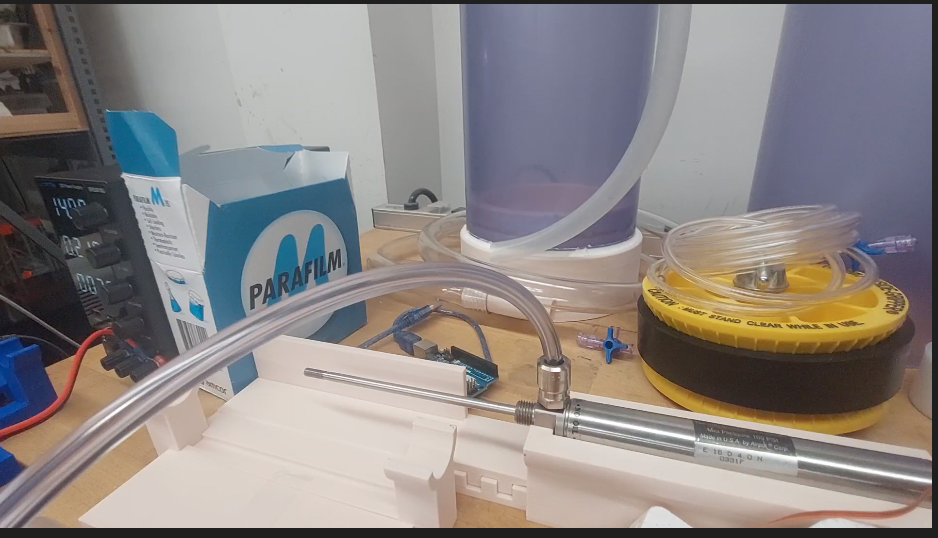
- Helped Xinyi with calculating how long it takes for the piston in the air cylinder to extend and how long does it take to retract; As I was taking videos, I realized that when I moved the air pressure to 4kg/cm^2, the piston no longer extended or retracted; so, the piston will no longer extend and/or retract with air pressure less than 4kg/cm^2 or less than 60 psi.
- Finished the tasks that Xinyi had for me to do which was to edit the videos that I took of the air cylinder at different points of pressure and some things that I noticed when I split each of the videos frame by frame is that as the pressure decreased, the amount of extended time was longer than 1 sec, which means that the extension/retraction time of the piston was slower each time.
Week Five - July 14th -July 18th
This week I:
- Continued to work on Arduino to finalize it for the air cylinder so that we can start testing our parastolic pump
- Learned how to sodder wires for the very first time and I have to say...it's not too bad and I'm not too shabby at it!
- I also learn how to use Fritzing to create my schematic for the mini Arduino to finalize it for testing our parastolic pump next week
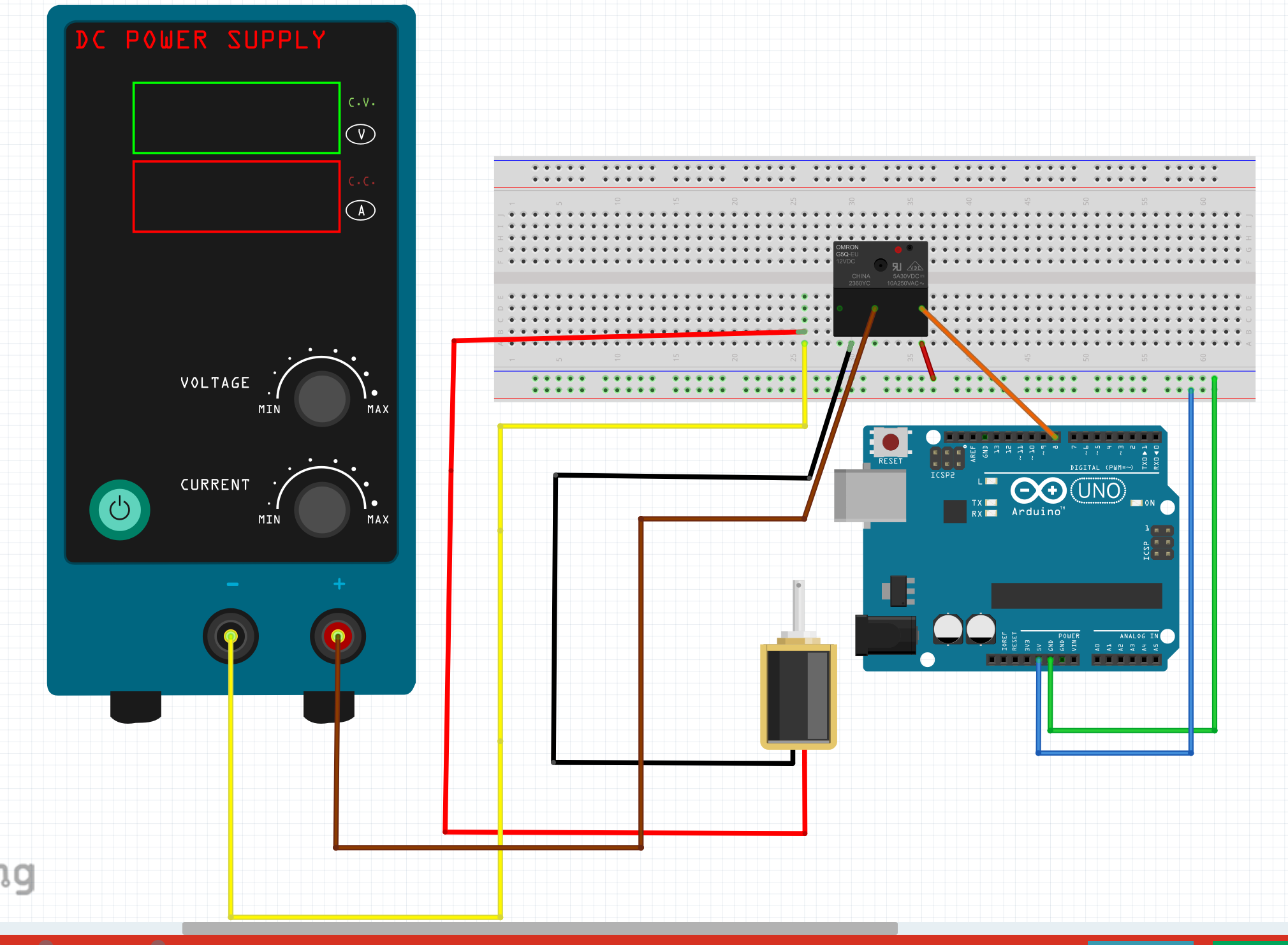
It looks like everything is coming together for our project and I am so excited to see the final product!
Week Four - July 7th -July 11th
This week I:
- went to the second part of the Arduino tutorial session where we learned how to implement code from TinkerCad into a actual hardware Arduino.
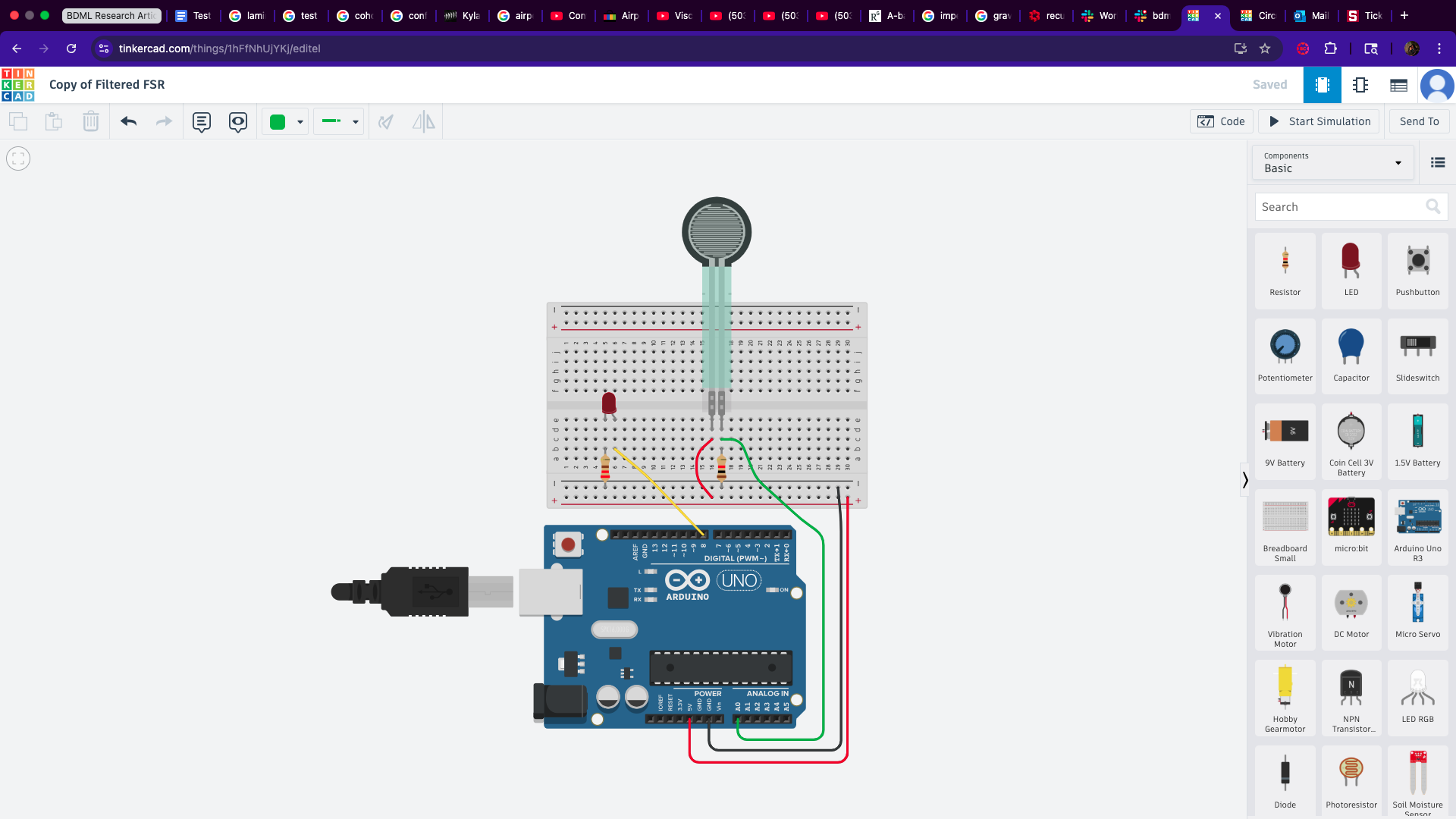
- watched a video explaining the Windkessel effect and how it works in medicine, specifically in the heart:https://www.youtube.com/watch?v=2wF56ZMDK4E
- watched another video explaining how to control an air cylinder using Arduino:https://www.youtube.com/watch?v=iXNNjtK5hp8
- Read the thesis and a few other readings that Xinyi sent us last week and here are a few takeaways that I got from it: https://docs.google.com/document/d/11ry_HrqhtcbzMx3gT2_3QPqwptYIf6astD4PGOseACE/edit?tab=t.0
- Learned about a relay and how to use it to power up a motor with a power supply and with the help of Arduino, I was able to get the motor to run!
- Some takeaways from this task:
1. It was very hard at the beginning because I am a visual learner and seeing the schematic of the wiring from the Arduino to the relay and then from the relay to the motor was very confusing to me and took me a lot of time to figure out. Xinyi helped me out a lot at the beginning but then she challenged me to figure it out without her help and I managed to do it!
2. I learned about where different wires have to go in order to direct the current to where you want it to go and knowing that helped me in where to put the wires on the breadboard.
3. It was so cool to finally figure out how to turn on the motor!
- Began reading an article that talks about the viscous impeller pump and the different mock circulation studies that were conducted using the Fontan physiology of a 4 year old child; I am currently still reading it right now.
- In this article, they are developing a viscous impeller pump, or VIP, implanted in the cavopulmonary junction via SVC or IVC that was designed for simultaneous pumping of blood from both the SVC and IVC to both pulmonary arteries.
I found a video that shows the simulation of the VIP inside the cavopulmonary junction: https://www.youtube.com/watch?v=0VmaeUP75JY
Week Three - June 30-July 4th
This week I:
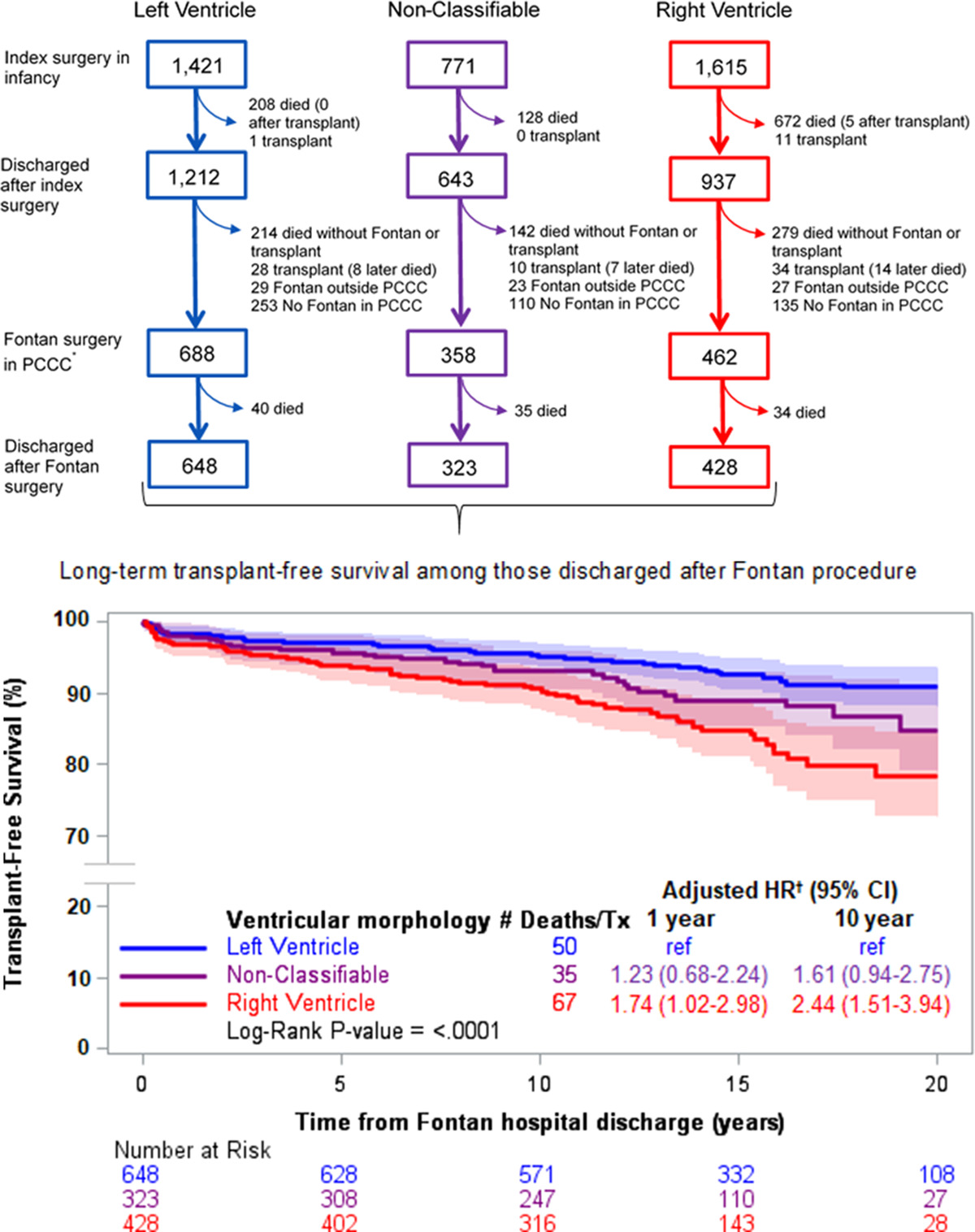
- went over another article that I found last week which talked about the various outcomes from patients that received the Fontan procedure that were born with just a single left ventricle, a single right ventricle or a non-classified single ventricle. In this article, I found a figure that stood out to me because it broke down the various patients and their life expectancy outcomes after receiving the Fontan procedure and patients who did not receive the Fontan procedure and here are some takeaways that I got from this figure:
Oster, Matthew E., et al. "Long-term outcomes in single-ventricle congenital heart disease: importance of ventricular morphology." Circulation 138.23 (2018): 2718-2720.
Long Term Survival Rates for Fontan Patients
Long-Term Outcomes in Single Ventricle
Congential Heart Disease
1. The graph shows that left ventricle, right ventricle and the non-classified ventricle patients all start at the same place initally, pre-surgery and/or after receiving the surgery. However, as time goes by, the graph shows a decline for the right ventricle patients (red line) and more of a constant for the left ventricle patients (blue line).
2. Right ventricle patients have more deaths recorded than left ventricle patients, which implies that left ventricle patients have a better quality of life after receiving the Fontan procedure than right ventricle patients.
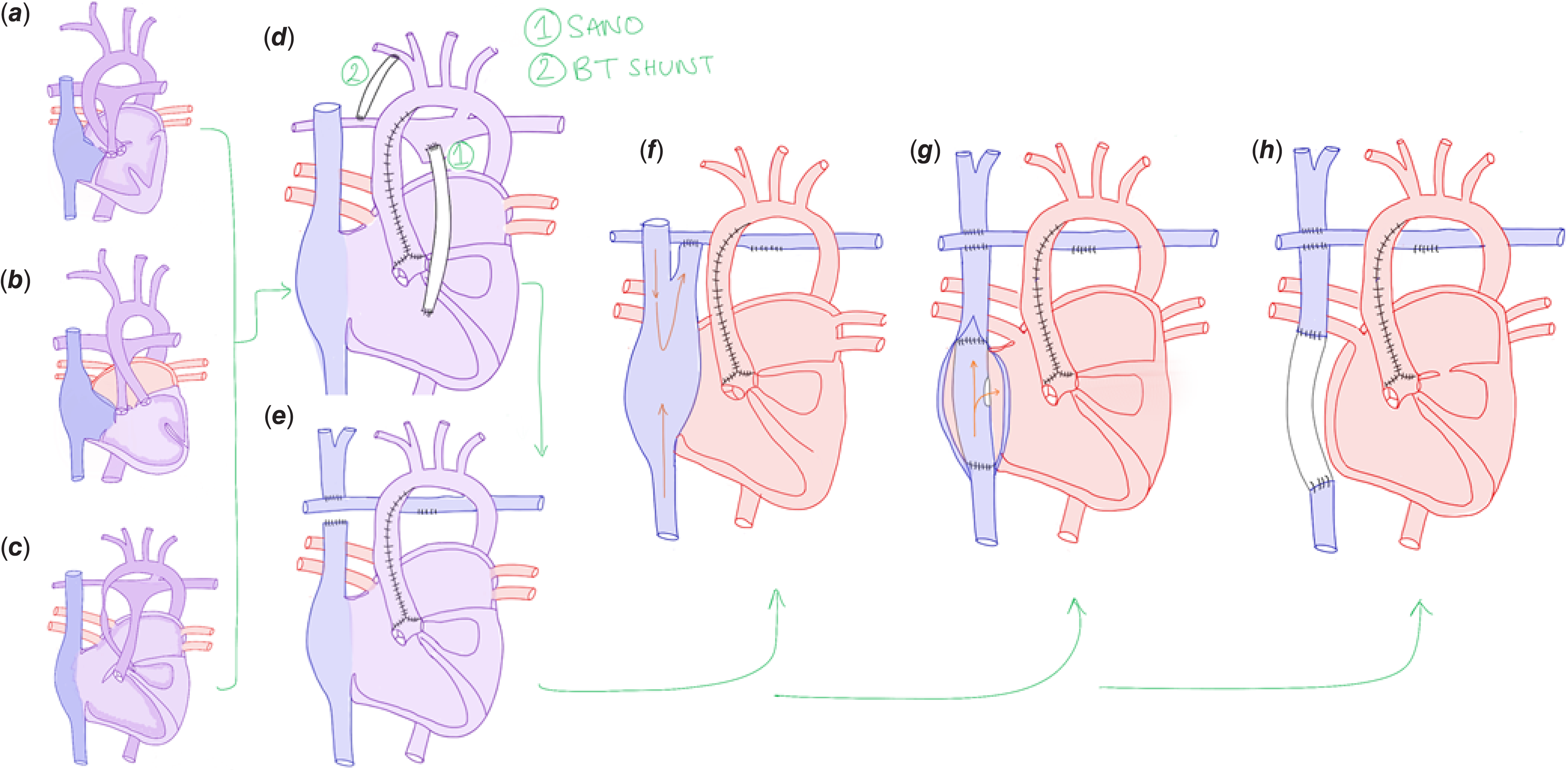
- went over another article that talks about pediatric patients (in this article it talks about three different procedures that infants go through; here is the figure that describes the three procedures:
Perioperative and Long-Term
Management of Fontan Patients
Parts (a), (b), (c) of this figure highlights the different types of congential heart diseases, tricuspid atresia, double-inlet left ventricle and hypoplastic left heart syndrome. Part (d) shows the Norwood procedure, which occurs during the first weeks of life, i.e 1-2 weeks old where a shunt is placed in the right pulmonary artery and the aorta with the goal to have low PVR. Part (e) shows the Glenn procedure which occurs when the baby is 2-6 months old and this procedure connects the superior vena cava and the right pulmonary artery and parts (f), (g), and (h) is considered the final procedure, the Fontan procedure, which happens when the child is 1-5 years old, when the pulmonary arteries are at a sufficient size to ensure low PVR that would hopefully last into adulthood.
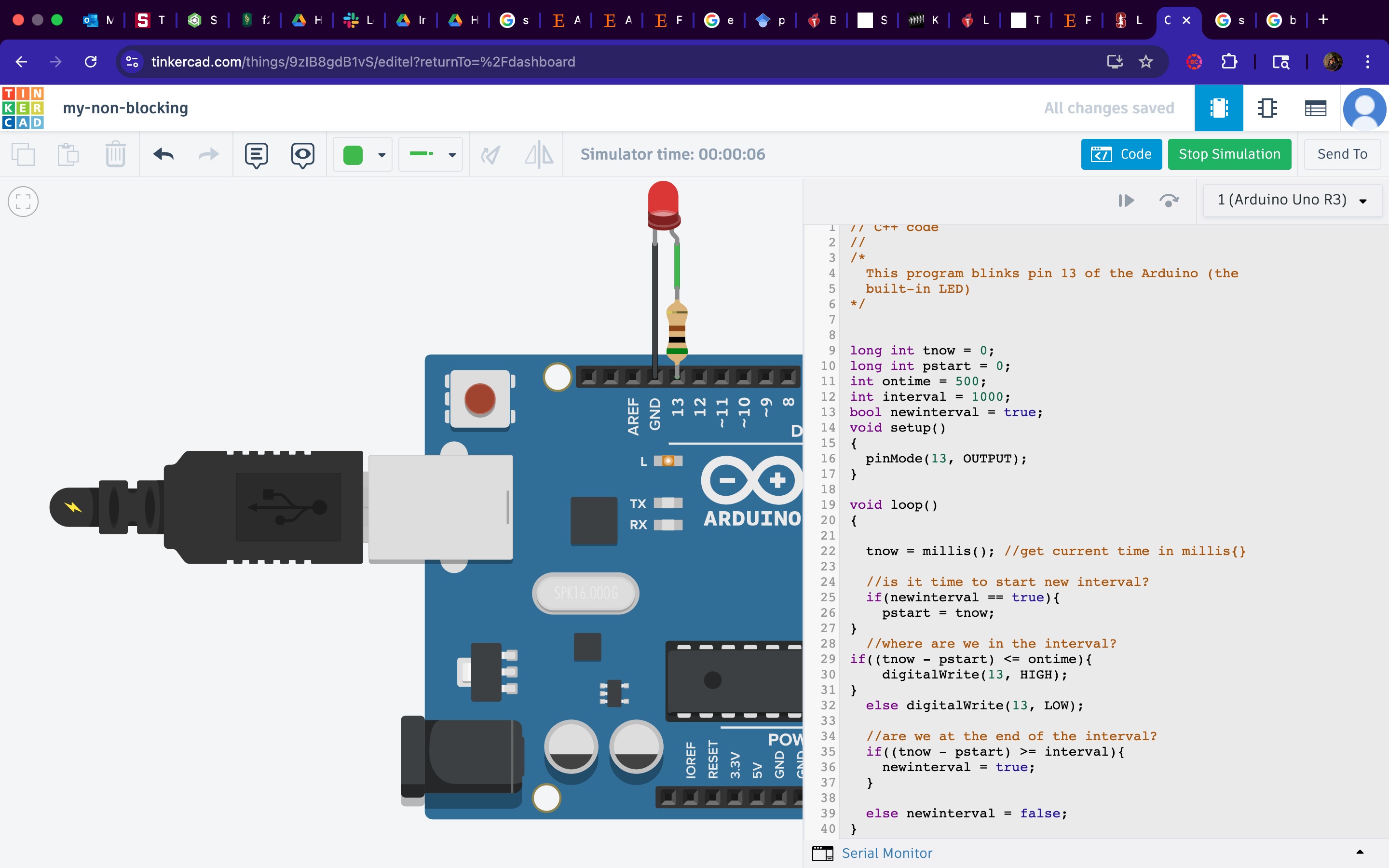
- Learned how to use Arduino which uses C++ for the very first time and it was so cool to see how it works and implementing the code to make the LED light turn on and off (blinking!):
- Read another article highlighting a test rig for an "atrium" conduit and here are some takeaways that I got from this reading:
Minimal Test Rig for Pulsed Conduit
1. There has to be a delicate balance between the transmural pressure and the pulsatile pressure in order ot be sufficient results in the test rig
2. The transmural pressure is found by the external pressure (15mmHg) and the internal pressure (-4 mmHg) and the height of the reservoir for water is slightly more than the height of the reservoir for the glycerin/water solution since the density for water is less dense than the glycerin/water solution.
3. The IVC inlet pressure is found with the following formula: P= pgh, where p represents the density of the liquid, g is the gravity of the fluid and h is the height of the reservoir.
- Watched a video explaining the Windkessel effect to make it easier for me to understand. I will link the video:
https://www.youtube.com/watch?v=hTezBRcYTzc
Week Two - June 23-27
This week I:
- started creating my wiki page
- got access to the BDML slack channel
- completed lab safety trainings for access to the PRL lab and other labs on campus
- cleaned up the BDML lab for inventory purposes
- read the scientific papers and here are some takeaways that I got:
Gewillig, Marc, and Stephen C. Brown. "The Fontan circulation after 45 years: update in physiology." Heart 102.14 (2016): 1081-1086.
' ' ' Fontan Circulation After 45 Years ' ' '
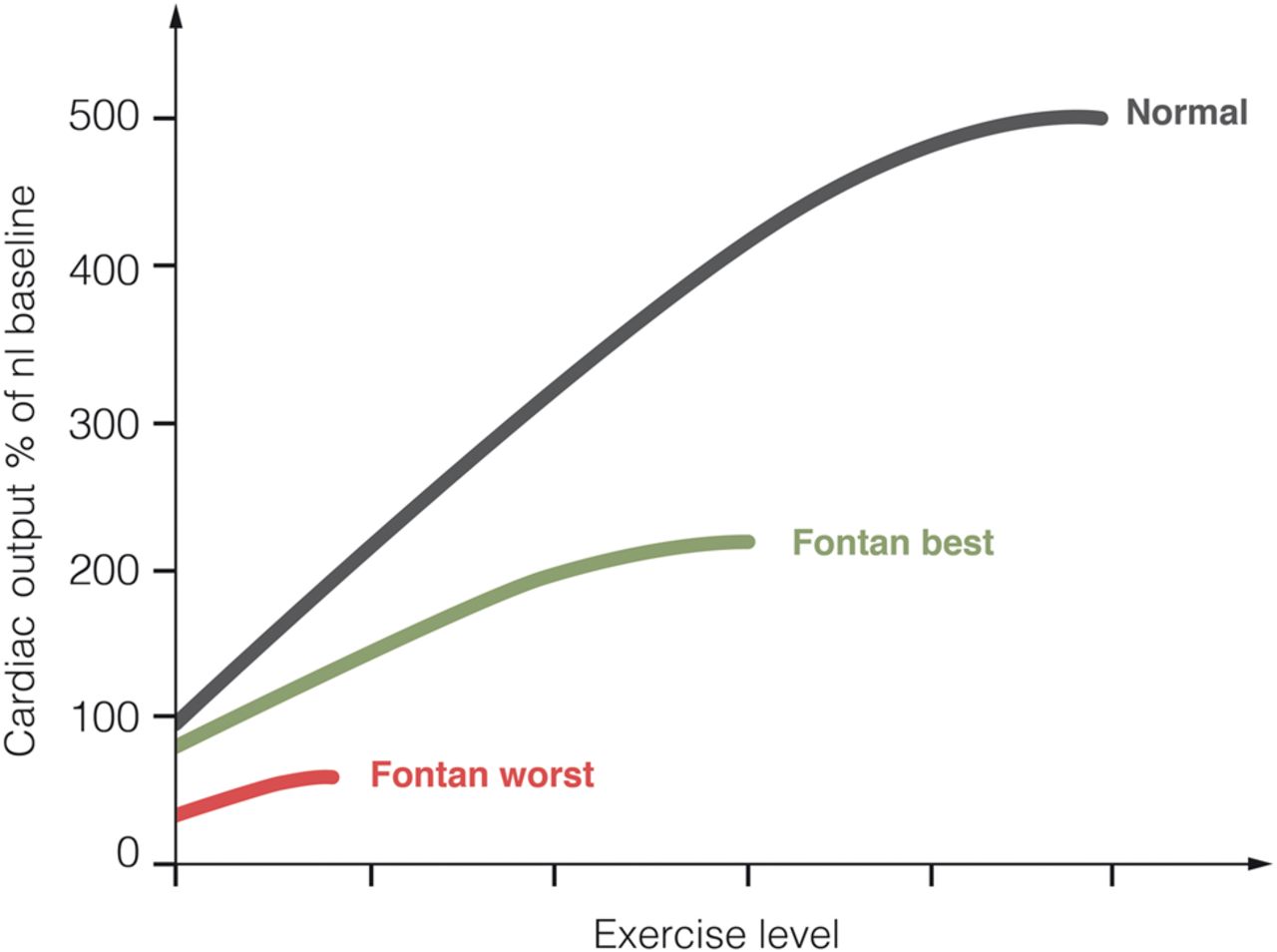
1. Fontan patients (good and bad) have to do significantly less exercise than normal patients due to their compromised ventricle development; Fontan patients on the green line can do relatively more exercise than Fontan patients on the red line because their cardiac output is worse than the cardiac output for Fontan patients on the green line
' ' ' Fontan Circulation After 45 Years ' ' '
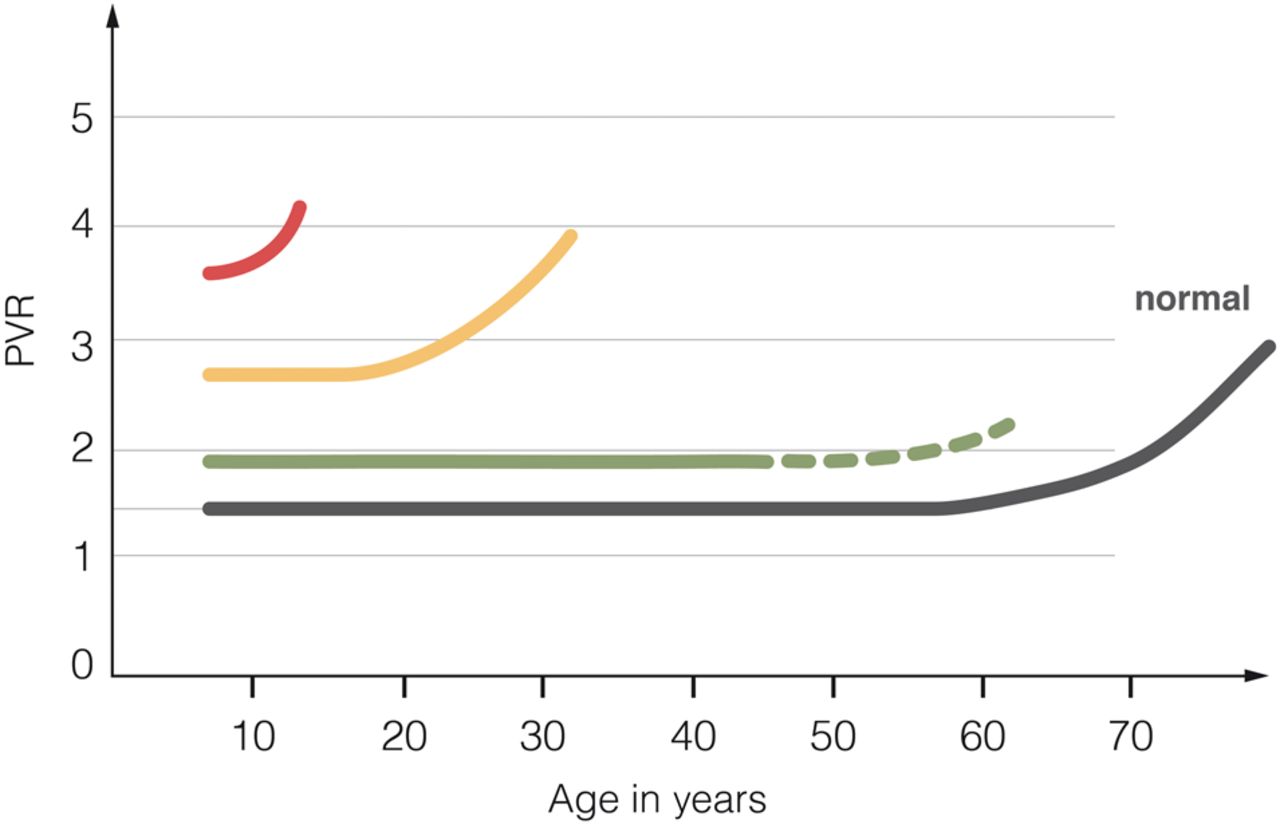
2. Fontan patients that have increased pulmonary vascular resistance (PVR) at the very start has a shorter lifespan than Fontan patients that have low PVR at the start, which is normal and slowly increases with age tend to live a longer lifespan.
3. I learned several new words that I have never heard of before. The first one was fenestration, which is simply an opening in a tissue and/or membrane. The second one is lusitrophy, which is simply how quickly the heart can go back to the relaxed state after a contraction.
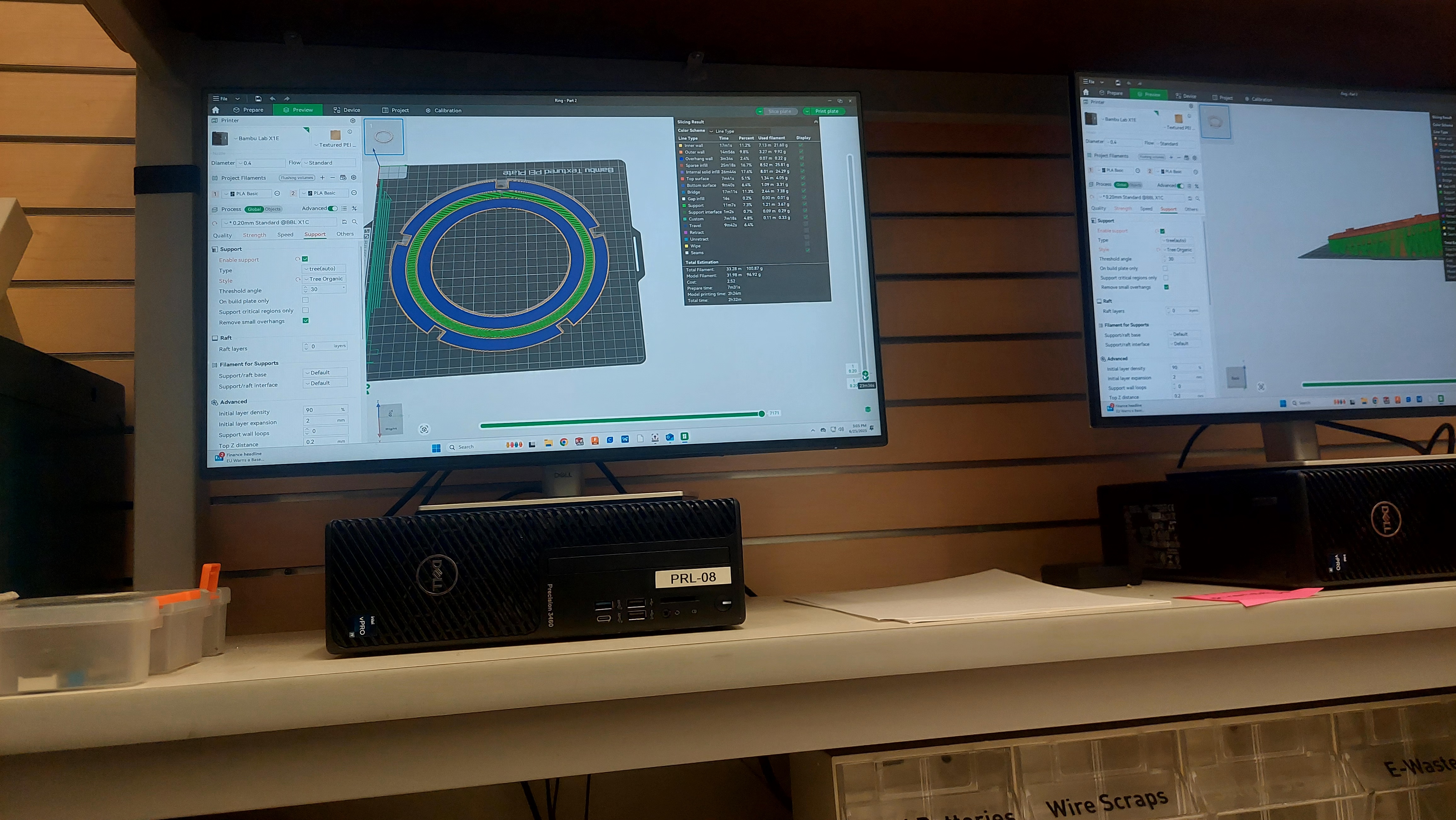
- I also did a safety orientation at PRL lab where I learned about 3D printing and began my first hands on project! Yay!
- I did my first Lasercutting project and also casting our 3D print and it was so cool to see!
Week One - June 16-20
This week I:
- began reading papers sent from Xinyi and Dr. Mark Cutkosky in terms of her project involving pediatric cardiac patients going through a Fontan procedure