new web: http://bdml.stanford.edu/pmwiki
TWiki > Main Web>TWikiUsers > SamsonPhan>ConductivePolymers (22 Apr 2009, SamsonPhan)
Main Web>TWikiUsers > SamsonPhan>ConductivePolymers (22 Apr 2009, SamsonPhan) Unfortunately, Craig has vetoed expanding the repertoire of materials at PRL because of inadequate venilation, making it impossible to combine the radial DOF with the conductive material etching.
Resistance of Conductive Polymers Table
March 17, 2008. We created 1 x 2 inch urethane blanks, then created a 2 x 2 mm groove on top, to be filled with various types of conductive polymers. We want to use them either as conductive paths to replace wiring or as a "seed" in which to electrodeposit.
Next step is to either electroplate or laser etch the blanks and test efficacy -- SamsonPhan - 18 Mar 2008
-- -- SamsonPhan - 19 Feb 2009
Laid out conductive polymers on Masonite to see if LaserCAMM? can cut them. Success! It appears that the laser can cut right through all of the different types of paints and epoxies. The actual conductive path was cut between the two sides.
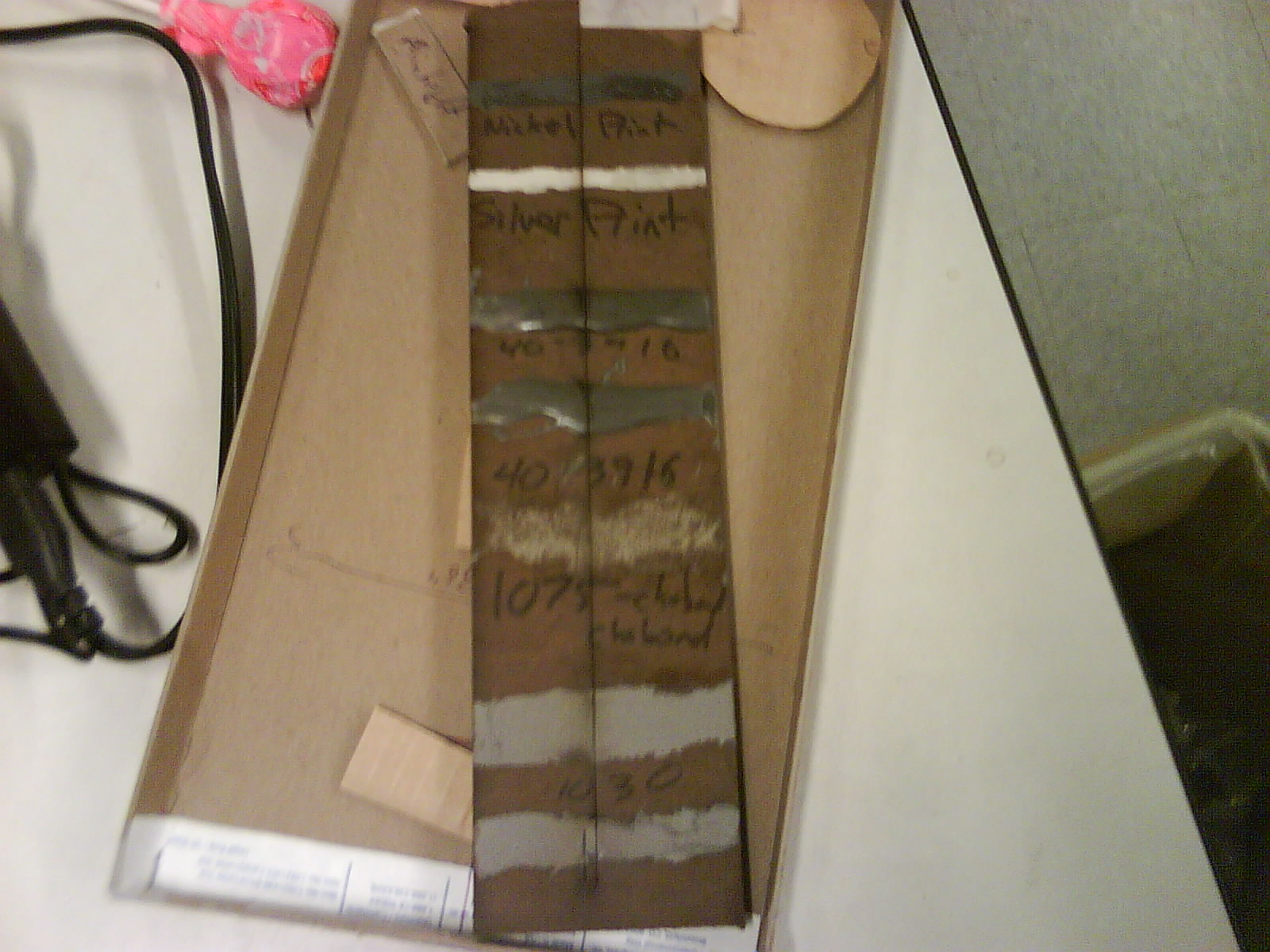
| Name | Resistance |
|---|---|
| Conductive Epoxy (from Physics Store) | 0.8 |
| Nickel print (from Physics Store) | 4 |
| Nickel Epoxy (from Epoxies etc) | No reading |
| Nickel Epoxy Sample 2 (from Epoxies etc) | No reading |
| Silver Epoxy (from Epoxies etc) | 4.5 |
| Silver Epoxy Sample 2(from Epoxies etc) | Variable |
| Silver Print (from Physics Store) | 0.5 |
| Silver Print Sample 2(from Physics Store) | 1.9 |
 Copyright &© by the contributing authors. All material on this collaboration platform is the property of the contributing authors.
 Ideas, requests, problems regarding TWiki? Send feedback